Monday, November 20, 2006

Philippine firms post $1.98M in sales at Tokyo food fair

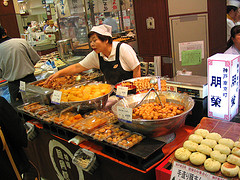
PHILIPPINE companies made $1.98 million in sales at the ASEAN Food and Beverage fair in Tokyo last month, making up six percent of the $31 million Southeast Asian exhibitors made, the Center for International Trade Expositions and Missions (CITEM) reported.

The sales, up 151 percent from $785,682 chalked up by Philippine exhibitors at last year’s expo, placed the Philippines sixth among the 10 participating members of the Association of Southeast Asian Nations in terms of sales generated, said CITEM, a unit of the Departmentof Trade and Industry.

The expo had 32 T small- and medium-sized enterprises participating. Three were from the Philippines:namely, GEM Foods International, which makes nata decoco and macapuno strings; Toscana Food Industry, producer of “dilis” fish and squid; and J. Emmanuel Pastries, maker of pili nut delicacies.

Trade and Industry Assistant Secretary Felicitas Agoncillo-Reyes, CITEM executive director, said the three companies were at 103 of 700 trade meetings held at the expo, which was organized by the ASEAN Japan Center.

Reyes said that the Philippine participants were compliant with the Hazard Analysis and Critical Control Point(HACCP) standards and well informed about export procedures.

She said Gem Foods closed deals with Singapore’s ASimple Life restaurant group, which includes Fish &Co., on supply of coco cream for a special noodle dish called “laksa.”

Toscano Food caught the attention of Singapore-based Tong Garden, which specializes in nuts and party snacks, and which expressed interest in Philippine goodies in its product line-up, Reyes said.

A Malaysian confectionery company offered to team upwith J. Emmanuel Pastries on the use pili nuts as new ingredient for chocolate products and other sweets.

Citing data showed that Japan imports 60 percentof its food supply worth $44 billion.

Philippine exporters should increase efforts to tap overseas markets and promote uniquely Filipino products.


-Ronnel Domingo INQ7.net
INQ Interactive, Inc.

Wednesday, November 15, 2006

Chinese schools interested to engage in MOU with RP

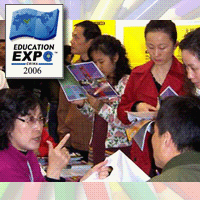
Chinese educational institutions expressed their interest to engage in memoranda of agreement (MOU) with the Philippines to facilitate the recruitment of Chinese students to the country, the Center for International Trade Expositions and Missions (CITEM) reported following the Philippine participation at the China Education Expo (CEE) recently.

MOU are legal documents describing the bilateral agreement between China and Philippines regarding the student-contracting program. Through this mutual recognition, Philippines will partner with local Chinese universities, agents, and overseas advising centers to recruit legitimate students who wish to study in the country.

According to Dean Enrico Hilario of the Technological University of the Philippines (TUP), their participation in CEE was a big success since their school was able to create MOU with several institutions like Yantai Vocational College and China Cultural Affairs. The former agreed to send around 20 Chinese nationals to the state university to study bachelor degree courses like information technology and mechanical engineering, while the latter signed a memorandum stating that they will send an instructor to teach Chinese language to the TUP faculty for free.

Other participants that joined the Philippine delegation in CEE were Enderun Colleges Inc., New England College, and the Royal Institute of Higher Education Inc. (RIHED).

“Although much work is still required for MOUs to generate business for the Philippine schools, the results could increase the market profile of our country and thus, bring long-term existence in the vast China market,” said Trade Assistant Secretary Fe Agoncillo-Reyes, executive director of CITEM.

The huge education market in China, which is approximately US$72 billion (or RMB580 billion), is the result of several factors such as its favorable demographic trends, rapid economic growth, and the increasing importance of higher education and English proficiency for career development and advancement.

The growing trend toward urbanization is expected to make Chinese citizens recognize that higher education leads to greater rewards in terms of income and job opportunities. As stated in China Demographics Yearbook, China has eight cities each with a population of four million, 50 cities each with over one million inhabitants, and 131 cities with more than 500, 000 people.

Furthermore, as the US$ 2.2 trillion China economy continues to follow the globalization trend, Chinese education authorities place greater emphasis on international education exchanges, including permitting large numbers of young Chinese to study abroad at their own expense or thru the government.

“There is a substantial demand for overseas education in China,” Agoncillo-Reyes added. “Other countries have increasingly recognized the opportunities in the market, even non-English speaking nations are actively promoting in China, so the Philippines with its acknowledged edge in English should not be left behind.”

CEE, the largest and most prestigious education fair in China, is officially sponsored by China’s Ministry of Education and is organized by the China Education Association for International Exchange. This year, 450 overseas schools, training centers, professional associations, and other education service providers from 30 nations all over the world participated in the said event.

The Philippine participation in the CEE is organized by CITEM, the export promotions agency of the Department of Trade and Industry.

Wednesday, November 08, 2006

UK companies to make the Philippines their alternative outsourcing hub

As more European firms open up to outsourcing as a viable business venture, they are now trying to follow what their counterparts in the United States have been doing favorably – send critical business processing work to offshore destinations like the Philippines.

In the recently concluded government-organized e-Services Philippines trade mission to Europe, Philippine IT/BPO companies generated substantial leads and an estimated US$3.15 million sales in business deals, according to the Center for International Trade Expositions and Missions (CITEM), the export promotions arm of the Department of Trade and Industry.

“Nine major companies from Europe are currently in negotiations to do offshore work here. One of these is a giant Dutch company who decided to locate a shared services center in Manila because of our business and cultural affinity with the West and English-proficient workforce,” said Trade Assistant Secretary Fe Agoncillo-Reyes, executive director of CITEM.

Based in a Forrester Research Report, offshore service spending in Western Europe will grow from EUR 1.1 billion in 2004 to EUR 3.6 billion in 2009, with the UK accounting for 76% of that amount. In the Schengen states, the Netherlands is one of the most open economies to outsourcing.

“The Philippines hopes to benefit from the growth of shared services centers (SSC) for multinational companies and niche on more specialized back office functions related to software, F&A as well as HR and supply management,” added Agoncillo-Reyes.

In fact, Philippine companies, according to Agoncillo-Reyes, are well positioned to take advantage of the demand for more sophisticated services, leading to knowledge process outsourcing (KPO) and global solutions delivery as shown in the trade inquiries we received in the mission.

The Philippine participants in the Europe mission were: Alliance Technologies (contact center/BPO technology enabler); BlastAsia (web-based applications, custom/packaged applications); DTSI (contact center/BPO technology enabler), IAMD Software Solutions (website development, animation); Logicall Inc. (contact center); RG Financial Services (financial & accounting services); ADEC Solutions (diversified BPO services); Innove Communications (telecommunications); PLDT (telecommunications); Pointwest Technologies (custom/packaged development); and Vinta Software (custom/packaged development).

Through the mission, the government likewise extended invitations for foreign delegations to
e-Services Philippines (15-16 February 2007), the country’s annual platform for IT and BPO. The delegates also met with EU associations Intellect Group, IAOP London, Rapier Group London, Ministry of Foreign Affairs in The Netherlands, and ICT Office in The Netherlands.

Following the mission, the Philippines was also nominated in the UK’s National Outsourcing Association (NOA) Awards for Best Practices. NOA is an independent body in the United Kingdom that promotes best practices, service, and innovation in outsorucing.

“As the world becomes flatter with the outsourcing trend, the challenge for the Philippines is to continue to move up the value chain and intensify the promotion of the Philippines as a viable location for specific verticals such as F&A, HR, and administration processing,” said Agoncillo-Reyes.

For more information on the Philippine trade and investment mission, please contact CITEM’s IT Services and Electronics Division at (+632) 8325044 and (+632) 8312201 locals 212, 251, and 301, email
itservices@citem.com.ph or visit the website www.e-servicesphils.com/europe2006

Tuesday, October 31, 2006

Animation contest to focus on global Filipino talent

For the past decades, Filipino animators have done extraordinary work for international studios like Pixar, Dreamworks, Warner Brothers, Cartoon Network, Nickelodeon and Disney. In a bid to promote Filipino talent in animation, the Department of Trade and Industry (DTI) through the Center for International Trade Expositions and Missions (CITEM), its export promotion arm and the Animation Council of the Philippines (ACPI) are launching Animazing Shorts 2007: 5th Animation Competition and the Philippine Animation Film Festival (PAFF).

The race is on for the next batch of outstanding Filipino animators who can create visually stunning work and tell a good story with a positive theme.

Animazing Shorts is open to all students of Philippine colleges and universities as well as freelance or employed animators. There is no limit to number of team members for group entries. The animated short could be in any medium – 2D, 3D or mixed. The contest is open to amateur animators (whether group or individual) from any college or university, and freelanced or employed animators.

ACPI and CITEM are now accepting entries for Animazing Shorts. The contest schedule includes the following: November 17 (Submission of Storyboards); November 20 (Initial Screening of Entries); November 21 (Announcement of Finalists); February 9 (Submission of Final Material); and February 10 (Final Screening).

Animazing Shorts entries also qualify for the First Philippine Animation Film Festival.

“The film festival is an opportunity to show the world Filipino ingenuity and creativity in the field of animation and help broaden awareness and appreciation of Filipino talent,” said Marie Grace Dimaranan, president of ACPI.

The film festival is also a homecoming event for Filipino animators working in international foreign studios all over the world so “they can showcase their works and how successful they are in animation.”

“In addition, the film festival is meant to encourage our young talents to look into animation as a career and also to encourage local content production,” added Dimaranan. “Hopefully, this event will encourage local producers to invest in animation projects and television networks to support locally produced content and grow the local animation market.”

As a new twist to Animazing Shorts, the government’s annual contest for animation, winning entries will be judged according to ballots and online polls accessible at the ACPI website
www.animationcouncil.org and e-Services Philippines website or www.e-servicesphils.com.

This year, one of Animazing Shorts winning films “Doodle of Doom” by College of St Benilde’s students Nelson Caliguia Jr and Jason Confesor had been qualified as among the finalists in the Nickelodeon’s Animation Festival, together with animators from France, Canada, Germany, England, and the United States.

For the past years, Filipinos are recognized not only for their creative and artistic skills, which is an important factor in animation, but also for the consistent quality and speed by which they can deliver their output. Filipinos are also proficient in English and have an innate ability to comprehend concepts and storylines better than their other Asian counterparts.

For information on the Animazing Shorts and the Philippine Animation Film Festival, please contact: CITEM’s IT Services and Electronics Division at (+632) 8325044 and (+632) 8312201 locals 212, 251, and 301, or email
itservices@citem.com.ph

Monday, October 23, 2006

Small exporters eye Japanese food market

Small Filipino enterprises are eyeing new niches for their food products in Tokyo’s annual ASEAN Food and Beverage Exhibition this month, according to the Center for International Trade Expositions and Missions (CITEM).

Participating in the Tokyo exhibition are GEM Foods International which makes nata de coco and macapuno strings, Toscano Food Industry which makes dilis and pusit, and J. Emmanuel Pastries which makes pili nut delicacies.
The ASEAN Japan Center organized this year’s exhibition whose theme is "The Flavours of ASEAN, the Choice for Shoku Iku of Japan."


"Shoku" means food and diet and "iku" means education. It is a concept which reflects the Japanese government’s drive to promote healthy living.

"This year’s Philippine participation in AFB hopes to assist our SMEs address the strict global safety standards of Japan and help them find a new niche for our local delicacies," said Trade Assistant Secretary and CITEM head Fe Agoncillo-Reyes.

Various one-on-one business meetings are arranged between Japanese buyers and the Filipino participants during their visit from Oct.15 to 21 this year with a projected observation tour of the Ajinomoto factory.

"For our exporters, penetrating Japan’s wholesale and retail food markets is worth pursuing. Currently, we export nata de coco and seafood to Japan and pili nuts are a welcome addition to our exports with huge potential. Promoting them in Japan will not only bring additional export revenues, but will also help the other allied industries in Bicol, the current center of the pili nut industry in the country," Agoncillo-Reyes said.

A study at the University of Hawaii at Manoa (home to macadamia breeders) showed that the Philippine pili nut is equivalent to macadamia. It is not only an extraordinary nut, but is also rich in nutritional value, which according to Agoncillo-Reyes, makes it a potential export in the health-conscious Japanese market.

In 2005, total sales amounted to $785,682 and generated significant inquiries.

Thirty-two exhibitors from 10 ASEAN countries are participating in the event.

The ASEAN-Japan Centre was established in 1981 and has been promoting trade, investment and tourism between ASEAN countries and Japan through various activities.

Source:
ABS-CBN Interactive
http://www.abs-cbnnews.com/storypage.aspx?StoryId=53882


Tuesday, September 26, 2006

Philippine suppliers eye ASEAN OEMs as partners

Philippine electronics suppliers are eyeing major original electronic manufacturers from the ASEAN in the forthcoming ASEAN Electronics Business Opportunities Exhibition and Conference (AE-BOEC), a whole day conference and reverse trade fair featuring major buyers from the ASEAN as presenters and exhibitors.

“This unique scenario gives our local suppliers for consumer electronics, electronic data processing, electronic manufacturing, and semi-conductor industries a chance to meet the major ASEAN buyers face to face and offer their new products and manufacturing capabilities in one venue,” said Trade Assistant Secretary Fe Agoncillo-Reyes, executive director of the Center for International Trade Expositions and Missions (CITEM).

The event, which coincides with the 12th ASEAN Summit and the ASEAN Electronics Business Leaders Meeting to be held in Cebu City, is also part of the ASEAN efforts to facilitate the integration of its electronics industries, Agoncillo-Reyes also said.

AE-BOEC is slated on 07 December at the Rizal Ballroom of the Makati Shangri-La Hotel.

One of the highlights of AE-BOEC is the ASEAN Electronics Reverse Trade Fair (AE-RTF) where suppliers can walk through a host of large electronic companies from the Philippines, Thailand, Vietnam, Malaysia, Singapore, and Indonesia, and get first hand information on the products, materials, and services, which the ASEAN buyers intend to procure.

AE-RTF also involves promoting the intra-ASEAN trade through a single production and supply base for all electronics products, discovering supply chain benefits, such as competitive pricing and turn-around time, and exploring possible opportunities for ASEAN brands/products to be sold to other regions.

Investors who are planning to expand their businesses within the ASEAN, can take a look of the investment scenario in different countries, and learn about the existing framework for intra-ASEAN trade agreements in said event.

The AE-BOEC is a joint undertaking of the Department of Trade and Industry (DTI) through the Board of Investments (BOI)’s Business Development Team for Electronics and the Center for International Trade Expositions and Missions (CITEM), and the Semiconductor and Electronics Industries of the Philippines, Inc. (SEIPI).

Companies who are interested to get a hold of the priority appointments for one-on-one business meetings must pre-register with the AE-BOEC Secretariat at 8311268, 8312201 locals 257 and 227, or email industrial@citem.com.ph.

Middle East offers huge market for Philippine food


The Philippine food industry stands to benefit from the projected increase in the Arab Peninsula’s food imports by over 50% of its estimated US$9 billion annual food and agricultural products, mainly attributed to the region’s rapid population growth (estimated to be 64 million by 2025), the Center for International Trade Expositions and Missions (CITEM) reported.


“The Middle East is one of the most interesting world markets for food and beverages. This region, including the GCC countries, already amounts to a US$ 12 billion food industry as of 2005,” said Trade Assistant Secretary and CITEM Executive Director Fe Agoncillo-Reyes.

In abid to address the growing Middle East food market, the Department of Trade and Industry through CITEM in cooperation with the Philippine Trade and Investment Center in Dubai and the Philippine embassies in Qatar, Bahrain, and Kuwait, will hold a Roadshow promotion dubbed as ‘IFEX Philippines Goes to the Middle East’ (17-26 November 2006).

The Roadshow primarily aims to capture the nearly food-independent GCC countries, whose economies have relatively high per capita income levels. GCC or the Gulf Cooperation Council member countries include Bahrain, Kuwait, Oman, Qatar, Saudi Arabia, United Arab Emirates, and Yemen.

“Aside from sustaining the image-building efforts of the country as a reliable source of consumer-ready and high value imported food products, we also intend to strengthen our foothold on the million-strong Overseas Filipino Workers (OFWs) based in the Arab world,” added Agoncillo-Reyes.

Agoncillo-Reyes also explained that this trade and business event will focus on the market prospects in the states of Dubai in U.A.E., Qatar in Doha, Manama in Bahrain, and Basra in Kuwait, while taking advantage on the locations’ geographic proximity to Saudi Arabia and other Arab states.

The IFEX Roadshow will include round table discussion with the Dubai Food Authority on the updated market entry requirements for imported food, courtesy calls on Philippine Embassies in areas concerned, pre-arranged business matchings with leading food trade associations and importers, and visits to key food retailers and wholesalers of Philippine food products in identified Arab states.

“We also plan to network with Halal certifying bodies and authorities in the Pan Arab regions. If Philippine-manufactured Halal products become globally compliant, then it will be easy for us to penetrate the Moslem market,” noted Agoncillo-Reyes. Reports say that the global Halal food market is set to reach US$ 500 billion by 2010.

In 2004, the Philippine delegation of the Middle East cum Food Festival clinched US$ 10.7 million in sales while the participants of the Saudi Food held last year generated a total of US$ 5 million sales. Bestsellers in these two fairs were canned tuna and sardines, preserved fruits, powdered coconut, condiments, fruits and vegetables, fruit juices, noodles, ice cream and dairy products, wines, cereals, and desiccated coconut.

To date, the 2005 Philippine exports on food and food preparations reached US$ 1.7 billion, posting a 4.9 per cent increase over 2004 figures. Meanwhile, a total of US$ 47.4 million worth of Philippine food products was imported by the Middle East particularly the U.A.E., Qatar, Bahrain, and Kuwait.

For information on joining the Philippine delegation to the Middle East, please call CITEM, Agri-Marine Division at 831-1282, 831-2201 locals. 204 and 238 or e-mail: agrimarine@citem.com.ph.